2026-04-30
Smart dimmable glass is entering more architectural spaces. Meeting rooms need privacy. Office spaces need better light control. High-end commercial interiors also need a cleaner and more integrated design. Many people notice the switch between transparent and frosted states first. But the transparent conductive layer is what makes that switch work in a stable way.
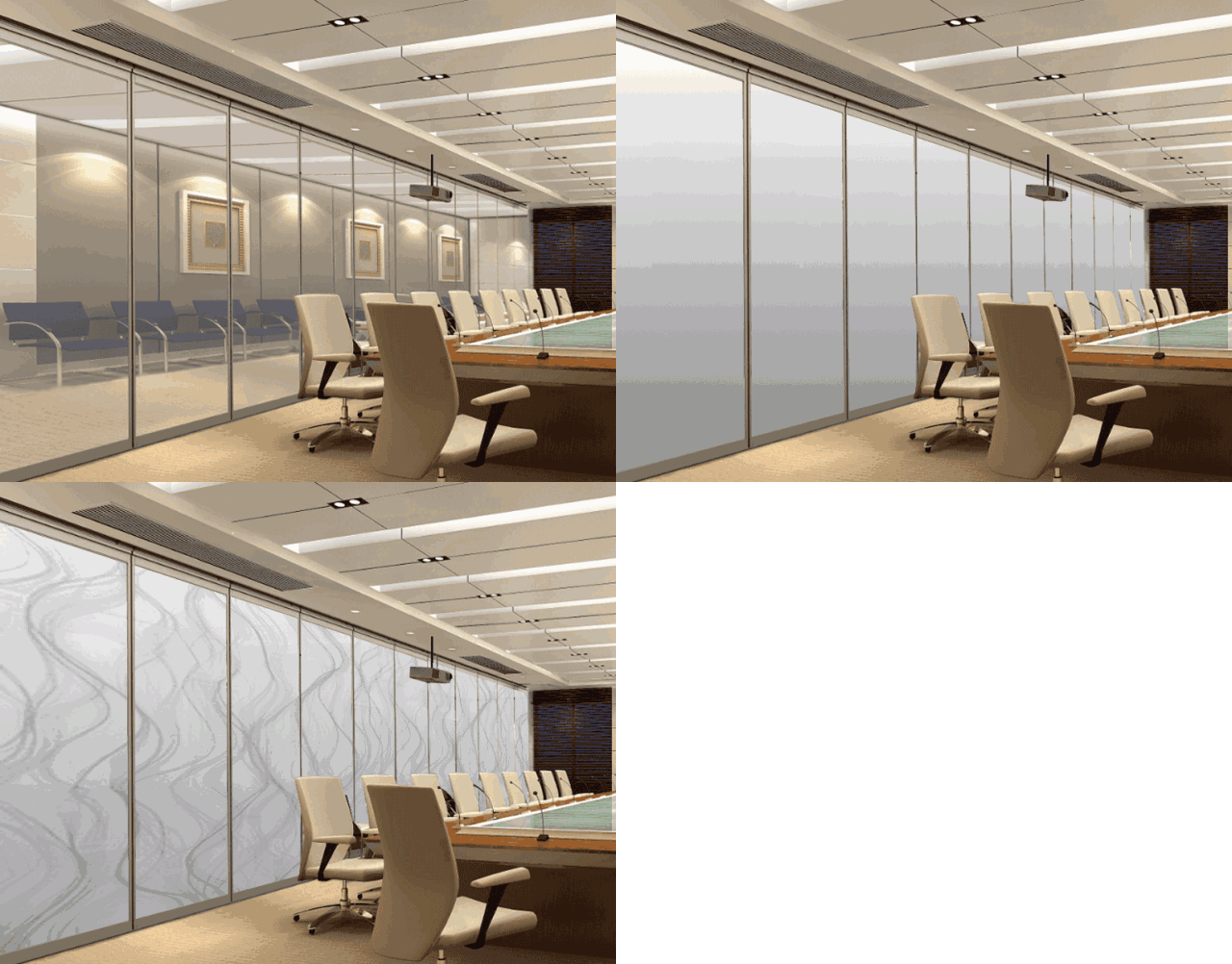
A dimming product does not rely on the dimming material alone. The transparent conductive layer is also critical. It affects the driving performance. It also affects light transmission, appearance, and long-term stability. If the conductive layer is not stable, the dimming effect will not be stable either.
Smart dimmable glass changes its optical state through electrical control. In a typical PDLC structure, the functional layer sits between two transparent conductive films. When AC power is applied, the liquid crystal molecules align. The glass then changes from a frosted state to a clear state. When the power is off, the glass returns to the frosted state.
This process looks simple. But the structure behind it is not simple. The conductive layer must deliver stable electrical performance across the whole surface. If the conductive layer is not uniform, the dimming effect can become uneven. If the conductive layer is not stable, long-term performance will also be affected.
The transparent conductive layer is one of the core functional layers in smart dimming products. It does more than carry current. It also influences transparency, resistance, visual consistency, and product reliability.
A high-quality dimming product needs a conductive layer that is both transparent and efficient. It must support stable driving. It must also fit the design needs of large glass panels and integrated architectural spaces. This is why the conductive layer has become more important as smart dimmable glass continues to evolve.
At MICRON, we use Metal Mesh copper conductive film in smart dimming applications. Our Metal Mesh is made from copper film through a precision etching process. We form copper into ultra-fine mesh lines that are almost invisible to the eye.
This structure gives the material two important strengths. It provides conductivity. It also keeps high transparency. These two features are both critical in smart glass products.
Metal Mesh copper conductive film can achieve a better balance between transparency, resistance, and stability. This makes it well suited for dimmable glass, smart roofs, and other intelligent transparent surfaces. It also gives designers more freedom when they work on larger panels and higher-end applications.
The demand for smart dimmable glass is changing fast. Glass panels are getting larger. Design standards are getting higher. Users also expect more comfort and more intelligent control.
A dimming product must now do more than switch between two visual states. It must also support a better user experience. It must fit modern design language. It must also work reliably over time. This trend is pushing the whole industry to rethink the role of the transparent conductive layer.
Future smart dimming products will focus more on experience, energy efficiency, and design integration. Buildings will use more intelligent glass solutions. Architectural surfaces will become more dynamic. Transparent functional materials will also take on a bigger role.
For MICRON, Metal Mesh copper conductive film is more than one material platform. It is becoming a key part of smart building materials and advanced glass applications. As dimming products continue to develop, the value of high-performance transparent conductive layers will become even clearer.
Metal Mesh copper conductive film is helping smart dimmable glass move forward. It supports better performance. It supports better design. It also supports the next stage of intelligent architectural materials.



 English
 العربية
 Čeština
 Dansk
Dansk Nederlands
 Français
 Deutsch
 Ελληνικά
 Magyar
 Italiano
 日本語
日本語 한국어
한국어 Polski
 Português
 Español
 Türkçe
 Українська
 Tiếng Việt

