2025-07-11
Organic Light-Emitting Diode (OLED) and Liquid Crystal Display (LCD) are the two leading flat-panel display technologies in use today. They differ fundamentally in how they generate images: an OLED panel is self-emissive, with each pixel made of organic diodes that emit their own light, while an LCD relies on a constant white backlight shining through liquid crystal shutters and color filters. These contrasting architectures lead to a number of trade-offs in picture quality, power use, manufacturing, durability, and cost. The following sections explain how each technology works and compare their performance across key criteria.
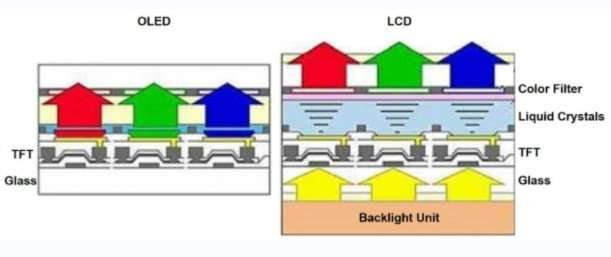
A typical LCD panel uses a white LED backlight positioned behind (or around) the liquid crystal layer. The liquid crystals act like tiny shutters that twist or untwist under an electric field, varying the amount of light that passes through color filters (red, green, blue) in each pixel. In effect, the backlight provides uniform white illumination, and the liquid crystals control how much of that light each pixel lets through. This means an LCD requires a backlight at all times, and the display’s thickness and rigidity are largely determined by the backlight and glass layers.
In contrast, OLED pixels emit light on their own. Each pixel is composed of organic compounds (diodes) that glow when current flows through them. There is no separate backlight – each pixel generates its own colored light. Because of this, an OLED screen can be extremely thin, even flexible (enabling curved or foldable displays). The lack of a backlight also means power is only consumed by pixels that are lit, and an OLED can turn off individual pixels entirely to show perfect black. In summary, the OLED vs LCD architectural difference is that OLED is an emissive display (each subpixel lights itself), whereas LCD is a transmissive display (backlight plus modulating layers).
The way each technology works leads to clear differences in image quality:
OLED excels in contrast. Since OLED pixels can be turned completely off, an OLED screen can display true black and effectively “infinite” contrast. In contrast, LCD blacks always have some light leakage because the backlight is on; even with advanced local dimming, a dark area on an LCD is really a very dark gray. OLED’s self-emissive pixels produce pitch-black levels, whereas LCD’s backlit pixels result in lighter blacks and lower contrast. This means shadows and dark scenes look deeper and more detailed on OLED.
OLED panels typically offer very wide color gamuts and saturated, vibrant colors. Many OLEDs (especially high-end AMOLED panels) can cover a larger percentage of the color space than standard LCDs. LCDs can also be quite colorful (especially with quantum-dot enhancements), but their colors are often described as more natural or slightly less vivid. In practice, OLED’s high saturation can make images “pop,” while LCDs may require color calibration for professional accuracy.
High-end LCDs often achieve higher peak brightness than OLEDs. Since LCDs use powerful LED backlights, they can reach 1,000 nits or more in HDR modes. OLEDs, by design, have a lower maximum output (often several hundred nits) because each pixel’s organic emitter has limited luminescence. As one technical analysis explains, OLED displays generally have significantly lower peak brightness than LCD-based TVs or monitors. The trade-off is that OLED’s blacks are so deep that scenes still look very high contrast even at moderate brightness.
OLED screens maintain color and contrast very evenly at wide viewing angles. Because each pixel emits light directly, the image does not shift or wash out much when viewed off-center. In contrast, many LCDs exhibit color shifting and reduced contrast at oblique angles (unless they use specialized IPS or similar panels). In short, OLED typically offers near-perfect viewing angles, whereas LCD colors/contrast can degrade off-axis.
OLED pixels switch on and off extremely quickly (on the order of microseconds). This means OLED has very fast response time and minimal motion blur. LCD crystals are slower to change state (especially at lower grades), which can introduce trailing or “ghosting” in fast scenes. Many gamers and video reviewers note that OLED’s refresh response is superior, making it ideal for high-frame-rate gaming or fast-moving video. (This also means OLED phones can use high refresh rates like 120–165 Hz and still maintain image quality.)
Key picture-quality differences in OLED vs LCD include:
– OLED: True blacks, very high contrast ratio, wide color gamut, wide viewing angles, very fast pixel response.
– LCD: Generally brighter whites, often more natural (less saturated) colors, narrower viewing angles (depending on panel type), slower response (some blur).
OLED is more efficient with dark content. Each pixel only uses power when lit, so areas of black draw virtually no energy. If you have many dark pixels (e.g. black backgrounds or dark-mode interfaces), an OLED screen can save a lot of power. This also enables features like “Always-On Display” (on phones) where only a few pixels light up minimal info.
LCD can be more efficient with very bright, uniform content. Since LCD backlights are relatively constant, showing a mostly-white screen does not dramatically increase its power usage beyond a baseline. By contrast, OLED must power many pixels at high intensity, which can draw more current. In practice, studies note that LCD backlight power is constant, whereas OLED power usage scales with brightness.
SO, OLED vs LCD power efficiency flips with screen content. When displaying primarily black or dark scenes, OLED usually uses less power. When displaying mostly bright/white content, high-end LCDs can sometimes be comparable or better. Overall, OLED is generally considered energy-efficient on average, but one cannot say it always consumes less – it depends on the image.
LCD panels are a mature, high-volume technology with well-established manufacturing. TFT-LCD production lines have been refined for decades, yielding high output and low per-unit cost. Key points about LCD manufacturing:
1. Mature process: LCD production uses common materials (glass, liquid crystals, LEDs) and well-understood processes. High yields (often above 90%) are typical.
2. Lower cost: Because of mature supply chains and scalable production, LCD screens (and their LED backlights) are relatively inexpensive to produce. Economies of scale and competition keep prices moderate.
3. Rigid panels: LCDs require rigid layers (glass substrates, polarizers, backlight modules), making them thicker and less flexible.
OLED manufacturing is more complex and costly:
1. Delicate organic layers: OLEDs use organic semiconductor layers that must be deposited under vacuum and sealed carefully. The materials are sensitive to moisture and oxygen, requiring advanced encapsulation.
2. Precision required: Even tiny defects can ruin an OLED panel. As a result, current production yields – especially for large or high-resolution OLEDs – are lower. Panels often have dead pixels or uniformity issues if the organic deposition isn’t perfect.
3. Higher cost: The specialized equipment and lower yields mean OLED screens usually cost more to make. Industry analyses confirm that OLED commands a price premium due to its production complexity and materials.
4. Flexibility advantage: On the positive side, OLED’s simple stack (no backlight) allows for very thin, bendable panels. This flexibility comes at a production cost, however.
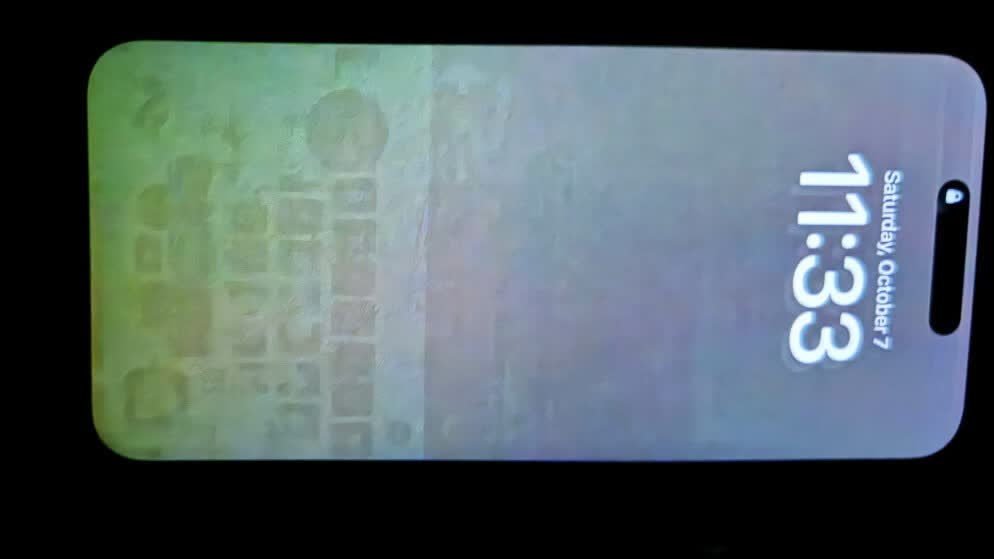
OLED pixels gradually lose brightness over time due to organic material degradation. Blue OLED subpixels age faster than red/green, so long-term color balance and peak brightness can shift. Typical OLED panel lifetimes vary widely (often quoted 20,000–100,000 hours) depending on usage and manufacturer. In practice, this means an OLED smartphone or TV may start losing some brightness or color fidelity after several years of heavy use. Another risk is burn-in: static images left on screen too long (like UI buttons or channel logos) can cause permanent ghost images. Modern OLEDs mitigate this with pixel-shifting and dimming features, so burn-in usually takes very heavy usage to appear.
LCD panels generally use inorganic materials and have no burn-in risk from static images (since the backlight is separate). Typical LCD life is often rated 30,000–60,000+ hours. Over time, the main aging issue is backlight dimming: the LED backlights gradually lose brightness, and polarizers can yellow. Rarely, liquid crystals or thin-film transistors may fail, causing dead pixels. But in normal use, many LCDs maintain acceptable image quality for a decade or more in consumer settings.
The choice between OLED and LCD often depends on the application:
– Smartphones & Tablets: Premium phones (iPhone Pro models, high-end Androids) overwhelmingly use OLED panels because of their high contrast, vivid colors, and thinness. OLED allows for very high pixel densities in smaller devices. Budget phones often use LCD/IPS panels to cut costs.
– Televisions: Both are used. High-end TVs (especially from LG, Sony) often use OLED for picture quality, while many mainstream and budget TVs use LED-backlit LCD (sometimes branded “QLED” or “NanoCell”). Outdoor signage or very bright rooms may favor LCD due to its higher brightness.
– Monitors: OLED monitors exist for gaming and creative work (for deep blacks and color). However, many desktop monitors and laptops still use LCD because of cost, maturity, and high brightness.
– Wearables & Specialty: OLED is popular in smartwatches, AR/VR displays, automotive displays, and foldable phones due to its thinness and flexibility.
LCDs dominate in simple digital signage, industrial panels, and devices where durability and cost are priorities.
– Flexible Displays: OLED’s plastic substrates enable curved or foldable designs – there are no comparable LCD equivalents. This makes OLED the only choice for rollable screens, curved TV walls, or foldable phones.
In procurement terms, consider: If ultimate image quality, contrast, and form-factor are needed (e.g. flagship products or digital art displays), OLED is favored. For cost-sensitive or very bright-environment displays (industrial screens, outdoor signage, basic monitors), LCD is more common.
| Feature | OLED | LCD |
|---|---|---|
| Light Emission | Each pixel is self-emissive (no backlight) | Pixels modulate light from a uniform backlight |
| Black Level / Contrast | True black (pixel off) = infinite contrast | Black = dark gray (backlight leak) = limited contrast |
| Color Gamut | Very wide; highly saturated colors | Moderate; depends on panel (quantum dots can widen gamut) |
| Peak Brightness | Lower (typically a few hundred nits) | Higher (often 1000+ nits in HDR-capable models) |
| Viewing Angle | Very wide; minimal color/contrast shift | Narrower; color and contrast falloff at off-angles (unless IPS) |
| Response Time | Extremely fast (negligible blur) | Slower (some motion blur/ghosting possible) |
| Power Efficiency | More efficient for dark content (pixels off) | More efficient for very bright content (constant backlight) |
| Thickness/Flexibility | Very thin and can be made flexible | Thicker (rigid layers) – not flexible |
| Lifespan | Shorter (organic aging, burn-in risk) | Longer (LED backlight life); no burn-in |
| Burn-in Risk | Yes – static images can cause retention | No (pixels don’t age unevenly; only backlight dims) |
| Typical Cost | Higher (complex manufacturing, low yields) | Lower (mature mass production) |
| Common Uses | Premium TVs, high-end smartphones, AR/VR, wearables, flexible displays | Monitors, laptops, budget TVs, signage, industrial displays |
OLED’s self-emissive design gives it best-in-class black levels and thinness, but involves complex, costly manufacturing and potential burn-in. LCD’s simple backlight-based design enables high brightness and durability at lower cost, but limits contrast and viewing angles. These technical contrasts mean that in practice, both technologies coexist – each dominating segments of the display market based on performance needs and price.
MICRON delivers cutting-edge solutions based on copper metal mesh technology, including touch films, transparent antennas, transparent heating films, and EMI shielding films. Holding over 60% of global patents in metal mesh technology, we are committed to innovation, backed by a dedicated R&D team and stringent quality control to ensure product durability and reliability.
As a trusted supplier to leading global touch device manufacturers, MICRON has established subsidiaries in countries such as the United States and Japan to provide timely and efficient services worldwide, ensuring seamless support for our international clients.



 English
 العربية
 Čeština
 Dansk
Dansk Nederlands
 Français
 Deutsch
 Ελληνικά
 Magyar
 Italiano
 日本語
日本語 한국어
한국어 Polski
 Português
 Español
 Türkçe
 Українська
 Tiếng Việt

